Hello everyone! Mr. H assigned us all a post answering a few percent questions, and here is mine. Feel free to leave a comment!
The first question asks what is 245% of $356.80. To solve this particular question the easiest way to do so is to use a ratio chart, as shown in the image above. As mentioned previously, the question asks what is 245% of $356.80, meaning $356.80 is the whole, or 100%. That is the first thing you put is what 100% is, or the whole. Our goal is to find what 245% of $356.80 is, so the easiest way to attack this kind of question is to find what 1% is. So how do we get from 100% to 1%? We divide by 100! Remember, whatever we do to one side we must to do the other (of the ratio chart). 100% divided by 100 is 1, and 356.80 divided by 100 is 3.5680. Now that we know what 1% of $356.80 is we can easily find out what 245% is quickly, simply by multiplying 1 by 245. Quite obviously, 1 multiplied by 245 is 245, and 3.5680 multiplied by 245 is 874.16. Our answer is $874.16.
The question asks what 68 3/4 of 730 is. We're using a ratio chart to solve this question. We begin with what 100% is, and divide that by 100 on both sides to find what 1% is, which in this case, is 7.3. From there we multiply 1 by 68.75 because that is the percent of we are looking for. Our answer is 501.875.
The question asks what 360% of 129.95. We begin our ratio charts with what 100% is, which would be 129.95. To easily find what 360% is since we know what 100% is, we divide 100% by 1, (which finds us 1%) and multiply by 360, which would obviously give us 360%. Since we divided and multiplied said numbers on the Percents side, we must do so on the Value's side. 129.95 divided by 100 is 1.2995, and 1.2995 multiplied by 360 is 467.82. Our answer is $467.82.
The question asks for the commission of a house if the house is sold for $345 000. To do that we find what 6.75% of 345 000 is. We begin our ratio chart with what 100% is, which in this case is $345 000. We divide 100% on both sides by 100 to find 1 percent, which is 3450, and multiply that by 6.75, which is 23287.5%. Our answer is $23287.50. We do this because commission is what the salesmen gets off of what he/she sells. He/She gets a certain percentage (in this case 6.75) of the sales price (in this case $345 000) so that's why we solved for 6.75% of 345 000.
The question asks how much sodium is one person eating daily if people are eating 182% of 1700 mg of it. As always be begin by writing out what 100% is, which would be in this case 1700. We divide that by 100 on both sides to find 1%, which would be 17. Then we multiply that by 182 on each side to solve for our answer. Our answer is 3094 mg. We do this because 1700 mg is what is recommended about, and what people are usually taking in is 182% of this. Our goal was to find 182% of that because that's what people were taking in.
In our video we decided to create a court/news cast theme. The video begins off in a court show with Human Race and Mother Nature, arguing over what the Human Race has done to Mother Nature's planet then the show is interrupted by breaking news about saving energy. Below is The Ninja's 2 Minute To Make A Difference video.
Hello everyone! Mr. Harbeck assigned us all to do a fractions review post so this is mine. In this post you'll learn about how to add, subtract, multiply, and divide mixed, improper, and proper fractions. The first thing we need to know about how to do all this is to know what a fraction is first of all. A fraction is a part of a whole. They're expressed as a/b usually. eg. 1/2 The two is the whole, or the total amount of possible pieces to make one whole. The one indicates how many pieces there are in the fraction.
ADDING FRACTIONS
When adding fractions we basically compare. When we compare fractions the wholes must be the same size. So when adding, we must find a common denominator. The easiest way to do so is to multiply both the numbers, although it is not the only way.
In the image above the example is 1/2 + 3/4. As mentioned previously, when adding fractions we basicially compare so when we compare the wholes need to be the same. For the wholes to be the same we must have a common denominator. Luckily, in this example 4 is our common denominator. So we re-write out equation with 4 as the denominator. Since our denominators have changed, so must our numerators. Whatever you do to the bottom, you must do to the top. So we ask ourselves, what did we do to 2 to get 4? We multiplied by 2, so we multiply the numerator by 2. So our answer is 2/4, the equivalent fraction to 1/2. What did we do to 4 to get 4? We multiplied by 1. So we multiply 3 by 1, 3/4. Remember to simplify, or change improper fractions to mixed numbers.
SUBTRACTING FRACTIONS
Like adding fractions, to subtract fractions we also find a common denominator. Once you've found a common denominator and the numerators are changed appropriately, you can then normally subtract the numerators.
Subtracting mixed fractions is basicially the same as subtracting any old fraction, except you need to make the mixed fraction into an improper fraction. To do so, you multiply the whole number by the denominator and add the numerator to find the numerator, and the denominator stays the same. Then, you can subtract as you usually do.
MULTIPLYING FRACTIONS
Multiplying fractions is a fairly simple business. To multiply fractions, you multiply the numerator by the numerator, and denominator by the denominator. Your answer could quite conceivably be somewhat of a large number. It is best to simplify to lowest terms, as shown in the image above. DIVIDING FRACTIONS
There are many ways to divide fractions. One of the simplest ways to divide fractions, is to multiply the first fraction by the second fractions recipricol. This method works everytime. Refer to the image above to see an example of this method. Remember to always simplifly to answer to lowest terms.
Another way to divide fractions is to use a ratio table. Mr. H's analogy of Paint Can and Room works well in interesting ways. To use the ratio table we find how many paint cans are needed for one whole room, in theory. On the left side is PC, or paint can. On the left, is RM, or room. RM is where the second fraction goes. We're trying to find out how many times the second fraction (RM) goes into the first fraction (PC). So, we need to get the fraction on the right to one whole. (eg. 5/5, 1/1, 3/3, etc. etc.) Remember, whatever you do to one side, you do to the other.
Once you have reached one whole, whatever the answer on the left is, should be your answer. To check if your answer is correct, you can try other methods. If both your results are the same, your answer is most likely correct.
WORD PROBLEMS
Ned has 10 chocolate bars and he is giving his brother 2/3 of his 10 chocolate bars. To find a fraction of something you multiply. I multiplied the amount of chocolate bars Ned has, and the amount he promised to give his brother. Ned should give his brother 6 2/3 chocolate bars.
Ned's brother does not get all whole chocolate bars, because one of them is 2/3, which isn't a whole.
We're to solve this word problem two ways and here is the second way I solved this word problem. I used 10 as a representation of 100% because it's an easy number to work with. I then converted 2/3 into a decimal and then into a percent as well, which was 66.6 repeated. Roughly speaking, 66.6 repeated is quite close to 6 2/3. I also used pictures to solve this question, to make absolute sure and to see if all my answers were the same.
The image above is an representation of the chocolate bars. Each chocolate bar was split into 3 equal pieces. 2/3 of each chocolate bar was coloured in. If I were to make the chocolate bars wholes, I would have 6 2/3 chocolate bars. So, Ned's brother really doesn't get all whole chocolate bars because of the 2/3 that is left over.
The best way to answer a word problem such as this would be to use a ratio table, and when we use a ratio table we're dividing.
15 scoops of flour make 6 2/3 cakes. What I did here was began with 2 1/4 scoops equaling 1 cake. My objective was to find out how many cakes 15 scoops made, so I plugged 15 under scoops. Then I had to figure out how I got from 9/4 (improper version of 2 1/4) to 15/1, which is the same as saying 15. I used some simple algebra and found that I had to multiply 20/3 to get from 9/4 to 15/1. Since I did that to one side, I have to have done it to the other side. On the cake side, I got 6 2/3.
Thanks for your time everyone! I hope this post was up to standards. If you have any questions concerning this post or something is incorrect feel free to comment!
We were given an assignment to complete 8 word problems with a partner and showcase the work using some blogger, google docs, etc. Below is Alex's and my presentation. Please comment, and hopefully enjoy! (:
As you might know, we were able to get a bonus mark if we did a post on what we learned about fractions. So, this is mine...
One thing I learned about fractions was adding them. I didn't know you were supposed to have a common denominator when you were adding them, but now I understand that the denominator must be the same when comparing two or more wholes. After all, you wouldn't compare a Blu-Ray player with a VCR, right? It just wouldn't make sense. The wholes must be the same size.
One thing I had difficulty with was using the 'borrowing' technique. I didn't quite understand it because it had initially confused me at first. Mr. H had said it was much easier compared to
changing a mixed number to an improper fractions and all that. But once I looked over the example a few times I finally understood what we were supposed to do when 'borrowing', and it really is much easier and less time consuming rather than changing the mixed number into an improper fraction. Just think about all the paper and graphite you'd be saving! ;)
Overall, I learned a lot about fractions. I never really enjoyed learning about fractions before but learning about the 'borrowing' technique has really begun to brighten my perspective on the whole subject. I hope this post isn't late!
Hi everyone! During yesterdays math class we were given a word problem about parks in New York City. The parks were Carol Gardens and Flatbush. People think that the children of New York City should get a place to play, so they decided to make some lots have a playground and some blacktop so that children were able to play blacktop games, like basketball for instance.
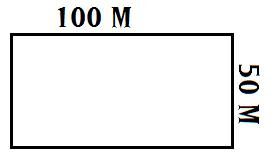
Both places have the same area, 100 M by 50 M. 3/4 of the lot will be playground and 2/5 of the playground will be hardtop. Our goal is to find out which park will have more hardtop. Note that both lots are rectangular.
Flatbush
The image above is a representation of the Flatbush lot. 2/5 of the whole lot is the playground. Above is a representation of how much of the lot will be playground. Now 3/4 of that 2/5 will blacktop. We're trying to find how many times 3/4 will fit into 2/5 evenly, since 2/5 of the lot is playground and 3/4 of that (2/5) is hardtop. To do so we divide 2/5 by 3/4. One of the most easiest ways to compare fractions is to divide the numerator by the denominator, or finding the decimal. 8 divided by 15 is 0.53 repeated.
Carol Gardens
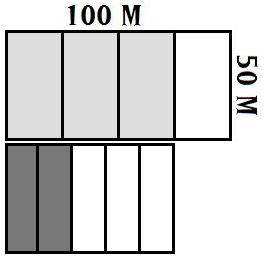
Above is a representation of Carol Gardens. As you can see it is identical to Flatbush. 3/4 of the whole lot is the playground.
2/5 of the playground (3/4 of the whole lot) is hardtop.
The darker shaded area is the hardtop. We're trying to find how many times 2/5 can fit into 3/4 evenly, because 3/4 of the lot is the playground and 2/5 of that is the hardtop. To do that you divide 3/4 by 2/5.
1.875 is 15/8 in decimal form.
Which brings us back to our main goal... Which park gets more blacktop than the other? As mentioned previously, one of the easiest ways to compare fractions is to convert the fraction into a decimal. Flatbush gets 8/15 of hardtop, or 0.53 repeated. Carol Gardens gets 15/8 of hardtop, or 1.875. So, Carol Gardens gets more hardtop than Flatbush. I hope this helps and that you're all well! (: Please feel welcome to comment if I've made a mistake, or have done this word problem incorrectly!
We were given an assignment about Pythagoras, a Greek mathematician who supposedly lived a very long time ago. We were also given a list of important vocabulary that could be of use to us.
The legs are the shorter part of a right angle triangle, while the hypotenuse is the longer part of a right angle triangle.
R.A.T. is an abbreviated form of Right Angle Triangle, which is a triangle that has a 90° angle. The Greeks were an ancient civilization who greatly influencial in philosophy, educational systems, etc. etc.
A theorum is a statement proved that it is right judging by previous evidence.
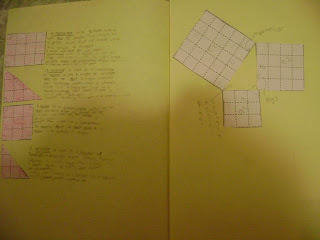
The three pictures are linked together because it has to with the Pythagorean Theorum. The Pythagorean therum tells us the relationship between the legs and hyptonuse of a right angle triangle, that is why there is a picture of a right angle triangle in the post (we know it is a right angle because of the square at the corner). There is a picture of a square because in the Pythagorean Theorum you make multiple right angles, resulting in a square. The last picture is of Pythagoras himself, or rather a sculpture of him. It was his theorum, so that is why he is there.
You are able to explain the artifacts using the vocabulary because it all has to do with the theorum. You use right angles the entire time because you are trying to find the relationship between the legs of a right angle triangle. The shapes you use are right angle triangles, and squares. The formula is A²+B²=C². The "guy" is obviously Pythagoras, and we care in Grade 8 Math because he supposedly created this formula. He was uber intelligent Greek mathematician who had mad skills in that particular subject, such as many others.
Below is a picture of how to find a missing length of an R.A.T.
Below is a picture of a word problem.
Now here are pictures of my Pythagoras Booklet.
Word Problem 2 a) The diagonal length of the square is 4.2 cm2 -- each square is 3x3 so you use a2+b2=c2. 9+9=c2 18=c2 18 [square root] = 4.2 4.2= c b) the diagonal of the checker board is 22.627 cm2 - theres 64 squares, and 64 divided by 4 is 16. 16 is the side length. So from there you use A2+b2=C2. Then you get 22.627cm2
The Distributive Property and Combining Like Terms Hello, there! In math class today we reviewed our homework about the distributive property and combining like terms, and looked at transposing. But in this scribe I'll be explaining the distibutive property and combining like terms, quite obviously. In our purple book, page 50 has questions dealing with the distributive property and combining like terms. I'll be explaining a few of them by walking through it. I hope it helps, and enjoy! ;)
eg. 4a - 2(a + 9) = 6 As soon as you identify what the question is, you multiply the number that is touching the brackets. This is using the distributive property. What's left you just bring down. So you would multiply 2 by a and 9 giving you 2a and +18.
Once you're up to this point, you would combine like terms.
Now your question is simplified to a two step equation. Add the opposite, and balance out by adding 18 on both sides. Now, you are left with a lovely one step equation. Simply use opposite inverse to isolate the variable. Since 2a is a multiplying question (because 2 is being multiplied by a) you would divide 2a by 2 to isolate a. To balance out, you multiply 12 by 2 as well.
So that is how you would solve for your variable! But you aren't done yet. You need to verify. So that's how you would solve a distributive property and combining like terms question! If for some reason I haven't explained something enough, or perhaps you don't understand something above, please feel free to comment!
Have you ever performed an act of kindness "just because"? In school, we were given an assignment to "Pay it Forward". We watched a movie about a boy our own age who tried to make the world a better place to live in. Grade 8 students, such as myself, are assigned to complete an act of kindness; and not only expect anything in return but to realize the feelings of giving rather than receiving. There are many things you could do for this type assignment such as: babysitting, shoveling snow, donate to charities and many more. I decided to help my parents by shoveling the snow in the front and back yard. I wanted to do so once it had snowed a bit, so I could have something to shovel.
I shoveled my parents' front yard walkway and backyard walkway. Living here, I know how cold it can get first hand, so I wore the thickest, biggest, and warmest jacket I owned, and ski pants, winter boots, a hat, a scarf, and gloves! To say at the least, I was very warm. I waited to shovel the snow once it had snowed outside and there was a fair amount of snow piled up. Unfortunately, it was windy, so it blew snow around. It took me roughly one hour or so to finish the deed. I felt content about what I did because I know I did something worth while by helping others rather than myself for once.
My sister had taken a photo of my while I was shoveling snow. I told her to "Pay it forward" too. She responded by asking, "What's paying it forward?" I told her "Instead of paying someone back, do something nice for another person, and so on."
When my parents came home from a hard day of work, they were surprised to see the walk ways were cleared, and shoveled. My dad was pleased to see what I had done, he even offered to pay me for the work I did. Obviously, I did not accept the offer. I told him "Pay it forward." My family thinks pay it forward is a good idea, and I think so, too!
For this type of assignment, the possibilities are virtually endless. There are so many things things you can do, so the result should be grand. Each student in each class had done at least one kind act. Roughly, if there are about 30 students in each class, and there are 4 homerooms. That means there are at least 120 students each doing at least one good deed in grade 8. That's 120 good deeds being done, just for the sake of doing a kind act! If each of those 120 people affected by this assignment were to "Pay it Forward" that would make 240 people affected by "Pay it Forward". The numbers grow exponentially, and "Pay it Forward" is a really great cause! Anyone can get involved, so you should too!
Haiku – Adding You add negatives And positives too The answer is sum
Tanka – Subtracting Although we subtract We never really ‘subtract’ Know the difference Subtracting is quite easy If you know how to subtract
Cinquain – Partitive Division Calculate Quick, simple Dividing, splitting evenly, sharing One way of dividing Equal groups
Free Verse – Quotative Division This is about quotative division It all comes down to the right decision First, know should how to group It’s not hard, don’t send in the troops!
Free Verse – Multiplying Rules You want to know the multiplying rule? I guess you don’t know, you fool. I learned the rule because I go to school! You mainly need to know a few main facts So now you know you can relax!
Chapter Two:Combining Like Terms and The Distributive Property
Script:
Podgy: Hello! Cappie: Hi. Who are you?
Podgy: Well, I'm Podgy, and I'm a student! I want to learn about destructive properties, and mining bike germs!
Cappie: Destructive properties and miming germs? Don't you mean distributive property, and Combining like terms?
Podgy: Oh, yes. Those things... Say... You wouldn't happen to know about distributive property and combining like terms .. would you?
Cappie: Oh, yes. I do. Would you like to learn, Podge meister?
Podgy: Oh, ah. Sure. I mean. I wouldn't mind... I mean. Learning about those things woudn't be too bad... I mean... If you don't mind teaching ... me, Podgy... That is. Hehe...
Cappie: Calm down Podge meister. I'll teach you, in one condition, though.
Podgy: So, uh. Cappie... Dude, guy, mister, sir... I mean, teacher... Sea foo... You know, they call the teachers Sea Foo in Japan that... I think it'd be okay to call you that.
Cappie:Quiet Down! The condition is for you to stop being a blubbering fool, you've been rambling all this time! So, there! I'll start off teaching you about combining like terms. It is more simple..
Podgy: OKAY THEN! Combining like terms it is!
Cappie: I have a practice question. n+3-5n+12 . First, look at the question. n+3-5n+12. Now, identify the constants (integers that won't change), and variables (letters). n +3 -5n +12 So now, you need to group them together. Or "combine like terms"! Once you know that, you know all you need to know about combining like terms!
Podgy: OK! I'll start with the variables... There are n and -5n. So... If I add another n to it, it should be -6n. Now for the consanants. All positives, woot woot! 3 and 12, make 15. So, is it -6n+15 ?
Cappie: No, it is not. Think about the steps! You made a little error in your thinking process. Remember that when you add a positive to a negative, the digit decreases. Think about a number line, that should help you a lot. Podgy: Gee, thanks Cappie! I'll try it once more! Starting off with the variables... n, and -5n ... should be -4n! And, and the 3 and the 12 still make 15, so it must be -4n+15! Aren't I right, sir?
Cappie: Right!
Podgy: Hot dog, am I ever glad! What do you know about Distributive Property?
Cappie: Well, here's an example to work with. 2 + 4(3n+8). You need to multiply the 4 with 3n, and +8, because 4 is touching the brackets. Once you have done that, combine the like terms.
Podgy: Oh, okay! Hmm. 4 multiplied by 3n is 12n. 8 and 2 equals 10 ... So, we add them together. Combine like terms! So the answer must be 12n+10!
Cappie: Podge meister, I'm quite proud of you. But your answer is incorrect. Your flaw was that you forgot to multiply the 4 by 8. Try again.
Podgy: Ok, then. 4 multiplied by 3n is 12n. 4 multiplied by 8 is 32. So, I'm left with 12n+32+2. Combine like terms! 32+4=34. So the answer must be12n+34! I get it! Thanks so much for teaching me Cappie, sir!
Cappie: Oh gosh, you're making me blush. Call me Cappie!
Podgy: Ok! Cappie it is!
Here is my XTRANORMAL movie, Combining Like Terms and Distributive Property (Part One)
Here is my XTRANORMAL movie, Combining Like Terms and Distributive Property (Part Two)
Chapter Three:One Step Equation Solving
Above is a picture example of how to do addition algebra. A very important part of algebra is knowing I.C.O.B.V, which is an acronym for...
I - Isolate the variable by C - Cancelling using the O - Opposite B - Balance V - Verify
Now, when confronted with a question such as the one provided, your objective is to isolate the variable. In doing so, you need to cancel out, using the opposite. But, you need to remember that you need to keep things balanced; so what to you do one side, you do to the other side. Once you understand this, you merely simplify to N equals whatever N equals. In this case (referring to the example above) N=3. So, in the example above, N+3=5 your objective is to isolate the variable. To do that, you need to cancel using oppposites. Remember to keep it balanced; what you do on one side, you do to the other side. N+3-3=5-3 Simplify that. N=2. Now that tells you what N equals. In order to get full marks, you need to verify. Just copy out the question, and substitute N with what N equals. N+3=5 2+3=5 5=5 Understand it?
In many ways, subtracting and adding are alike, like how you solve algebra questions. Above is an example of a subtracting algebra question. Like adding, you need to isolate the variable by cancelling out using opposites. Do not forget to balance by doing what you do to one side, do to the other side, and verify. The question is N-5=1. Isolate by cancelling out, using the opposite. Don't forget to balance out! N-5+5=1+5 Once you have that, you need to simplify it. N=6 Once the question has been simplified, you need to verify. N-5=1 6-5=1 1=1 Easy-peasy.
Now multiplicative type is a bit different, but no harder, no easier. Above is an example: 2N=10. What you need to do still has to do with I.C.O.B.V. Isolate, cancel, oppositve, balance, verify. Ask yourself, what is the opposite of multiplying? Well, the answer is as simple as the question itself! Division, of course! So, to isolate N, (or, to get it by itself) you divide 2N by 2. But since you've divided 2 on one side, you must do the same to the otherside, leaving you with N=5. Since you know what N equals, you must verify.
2N=10 2(5)=10 10=10
If you don't understand something, feel free to comment! Or perhaps I've made an error, and you'd like to point it out, please comment all the same! :)
As I've said, adding and subtracting are in someways similar, but they're also opposite. Well, since multiplying and dividing are opposite they're also similar is some ways. They're alike because they use eachother to do algebra. Above is an example of how to do dividing type algebra. N = 6 -- 2
With a question like this you need to isolate the variable by cancelling using the opposite. Don't forget to balance it out! (2) N = 6(2) ------ 2
Now simplify.
N=12
Now that it is simplified, verify!
N = 6 -- 2
12 = 6 -- 2
6=6
Please feel free to comment on this!
Chapter Four:Algetiles Movie
(I'm not exactly sure what the title and tags are... So, I guessed)
Here is Giselle's, Nikki's, and my movie for Adding, Subtracting, Multiplying, and Dividing with Algebra Tiles.
 Hello everyone! Mr. H assigned us all a post answering a few percent questions, and here is mine. Feel free to leave a comment!


 The question asks what 360% of 129.95. We begin our ratio charts with what 100% is, which would be 129.95. To easily find what 360% is since we know what 100% is, we divide 100% by 1, (which finds us 1%) and multiply by 360, which would obviously give us 360%. Since we divided and multiplied said numbers on the Percents side, we must do so on the Value's side. 129.95 divided by 100 is 1.2995, and 1.2995 multiplied by 360 is 467.82. Our answer is $467.82.


 In the image above the example is 1/2 + 3/4. As mentioned previously, when adding fractions we basicially compare so when we compare the wholes need to be the same. For the wholes to be the same we must have a common denominator. Luckily, in this example 4 is our common denominator. So we re-write out equation with 4 as the denominator. Since our denominators have changed, so must our numerators. Whatever you do to the bottom, you must do to the top. So we ask ourselves, what did we do to 2 to get 4? We multiplied by 2, so we multiply the numerator by 2. So our answer is 2/4, the equivalent fraction to 1/2. What did we do to 4 to get 4? We multiplied by 1. So we multiply 3 by 1, 3/4. Remember to simplify, or change improper fractions to mixed numbers.
 Like adding fractions, to subtract fractions we also find a common denominator. Once you've found a common denominator and the numerators are changed appropriately, you can then normally subtract the numerators.
  Subtracting mixed fractions is basicially the same as subtracting any old fraction, except you need to make the mixed fraction into an improper fraction. To do so, you multiply the whole number by the denominator and add the numerator to find the numerator, and the denominator stays the same. Then, you can subtract as you usually do.
 Multiplying fractions is a fairly simple business. To multiply fractions, you multiply the numerator by the numerator, and denominator by the denominator. Your answer could quite conceivably be somewhat of a large number. It is best to simplify to lowest terms, as shown in the image above.
 There are many ways to divide fractions. One of the simplest ways to divide fractions, is to multiply the first fraction by the second fractions recipricol. This method works everytime. Refer to the image above to see an example of this method. Remember to always simplifly to answer to lowest terms.
 Another way to divide fractions is to use a ratio table. Mr. H's analogy of Paint Can and Room works well in interesting ways. To use the ratio table we find how many paint cans are needed for one whole room, in theory. On the left side is PC, or paint can. On the left, is RM, or room. RM is where the second fraction goes. We're trying to find out how many times the second fraction (RM) goes into the first fraction (PC). So, we need to get the fraction on the right to one whole. (eg. 5/5, 1/1, 3/3, etc. etc.) Remember, whatever you do to one side, you do to the other.

 The image above is an representation of the chocolate bars. Each chocolate bar was split into 3 equal pieces. 2/3 of each chocolate bar was coloured in. If I were to make the chocolate bars wholes, I would have 6 2/3 chocolate bars.
 The best way to answer a word problem such as this would be to use a ratio table, and when we use a ratio table we're dividing.
  15 scoops of flour make 6 2/3 cakes. What I did here was began with 2 1/4 scoops equaling 1 cake. My objective was to find out how many cakes 15 scoops made, so I plugged 15 under scoops. Then I had to figure out how I got from 9/4 (improper version of 2 1/4) to 15/1, which is the same as saying 15. I used some simple algebra and found that I had to multiply 20/3 to get from 9/4 to 15/1. Since I did that to one side, I have to have done it to the other side. On the cake side, I got 6 2/3.

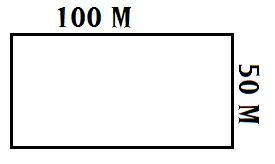 The image above is a representation of the Flatbush lot. 2/5 of the whole lot is the playground.
 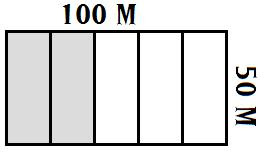 Above is a representation of how much of the lot will be playground. Now 3/4 of that 2/5 will blacktop.
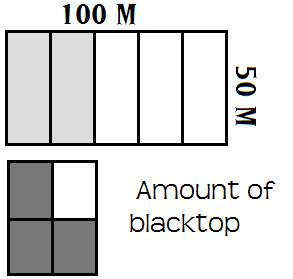 We're trying to find how many times 3/4 will fit into 2/5 evenly, since 2/5 of the lot is playground and 3/4 of that (2/5) is hardtop. To do so we divide 2/5 by 3/4.
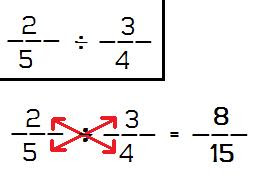 One of the most easiest ways to compare fractions is to divide the numerator by the denominator, or finding the decimal. 8 divided by 15 is 0.53 repeated.
 Above is a representation of Carol Gardens. As you can see it is identical to Flatbush. 3/4 of the whole lot is the playground.
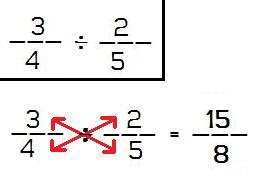 1.875 is 15/8 in decimal form.
 y that could be of use to us.
 The Greeks were an ancient civilization who greatly influencial in philosophy, educational systems, etc. etc.
 The three pictures are linked together because it has to with the Pythagorean Theorum. The Pythagorean therum tells us the relationship between the legs and hyptonuse of a right angle triangle, that is why there is a picture of a right angle triangle in the post (we know it is a right angle because of the square at the corner). There is a picture of a square because in the Pythagorean Theorum you make multiple right angles, resulting in a square. The last picture is of Pythagoras himself, or rather a sculpture of him. It was his theorum, so that is why he is there.
 You are able to explain the artifacts using the vocabulary because it all has to do with the theorum. You use right angles the entire time because you are trying to find the relationship between the legs of a right angle triangle.


 Here are my Pythagoras Videos.
 Now your question is simplified to a two step equation. Add the opposite, and balance out by adding 18 on both sides.
 Now, you are left with a lovely one step equation. Simply use opposite inverse to isolate the variable. Since 2a is a multiplying question (because 2 is being multiplied by a) you would divide 2a by 2 to isolate a. To balance out, you multiply 12 by 2 as well.


