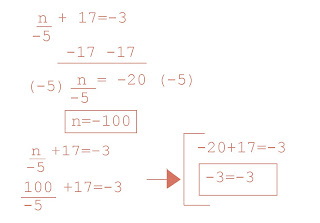
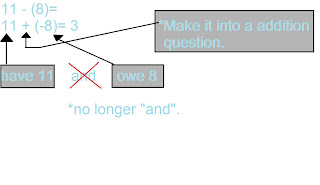
One day, the backyardigans were bored in their backyard having nothing to do. While just sitting there Pablo says aloud "Lets do something we'll never forget, lets imagine we're at the magical forest of integers!". "That sounds like a unique imagination" says Tasha. "Pablo what exactly are integers?... the rest of us don't even know what it means" says Austin. Pablo says in a clear voice "Integers are positive and negative numbers". Pablo went on, now explaining how to add integers". "When 2 numbers are positive you can simply add the 2 numbers together, when 2 numbers are negative you add the 2 numbers together and the sum remains a negative number". "To add a positive and a negative integer you subtract the smaller number from the larger number and the sum will have the sign of what ever sign the larger number had."
Pablo and the rest started to image their surroundings from a backyard to a "magical forest of integers". The magical forest had tall trees with integers hanging from it, bushes had integers instead of berries on it, even the ground covering plant had numbers on them. Pablo and the friends were surprised by how colourful the "magical forest of integers" was. It had red numbers, blue numbers, light green numbers that matched the trees, yellow numbers and so many colors that you could possibly imagine. Pablo saw a path of rocks, with an arrow pointing to go down the path and so Pablo called the rest of the gang to follow along.
While they strolled down the path they reached a deer. The deer seemed very happy to see them, while they drew closer to the deer, the deer said in an excited but clear voice "Welcome, now that you are here you will be encountering many animals with "integer" questions, the animals will ask anyone of you to answer the question, when you finish the task you will see a "magical castle", the animal closest to the magical castle will hand you a key so that you 5 can go in the magical castle and each of you can make 3 wishes in the castle". The deer then turned to Pablo and said "here is your first question, if you answer this question right you may be able to go along with the rest of your journey". (+7)+(-2) the deer said. Pablo in his head thought of it as money. Pablo mumbled positive equals to "I have" and negative equals to "I owe". The answer is "+5" Pablo yelled aloud. "That is correct " the deer said, " now you may go along with your journey, good luck to the 5 of you" the deer said happily.

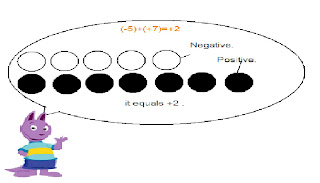
They once again went walking down the path. A few moments later a raccoon walk out from behind a bush and stoped right infront of them. As they drew closer to the raccoon it looked as if the raccoon was smiling at them. The raccoon said aloud and clear "Hi there, this is your second question", and looked at Austin. (-5)+(+7) said the raccoon. Austin looked down at the ground and saw 5 small rocks that would represent the negatives and 7 large rocks that would represent the positives, he thought of the rocks as "Chips". Austin shouted the answer is "+2"! The raccoon said excitedly "Terrific, that's correct, you may now follow through".
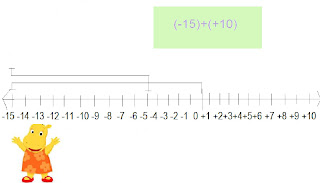
 They were so excited they almost begun running down the path. Tasha yelled "look, its the next animal with our next question", and they rushed down the path. When they got near to the animal they could all see it was a fox. The fox said "Nice to see you, here is your third question", and the fox glanced at Tasha. (-15)+(+10) the fox said. Tasha invisioned a numberline in her head with the (-) negatives on the left, and the (+) positives on the right. She said in a questioning voice "-5". The fox immediately said "Yay! Good for you, now you may reach your fourth question."
 They all started running at full speed down the path to know what the next question was going to be, and to see the next animal. They finally reached the animal and which the animal was a friendly bear. The bear said "Hello, I'm pleased to see you this far, here is your fourth question...hm..." The bear look at all of the backyardigans, and then pointed at Tyrone. (+6)+(-6) "here you go" said the bear. Tyrone mumbled "its a zero pair, so its "0"! he yelled! "Good job, now you better hurry along to see your next question" said the bear.
Will the backyardigans get to the magical castle and complete the task ?TO BE CONTINUED ... (: The Backyardigans Journey Through Integers Part 2.
The backyardigans are now even more excited to continue they're journey through integers. As they were walking down the path they noticed that the rocky path came to a end, and lead to a big open field. It basically was a sea of color, it was full of integer wild flowers. In the far distance they saw something that appeared to be a big black horse. They started to skip through the flowers, happily keeping their eyes on the animal ahead of them. As they drew closer they could all see that it was indeed a beautiful black horse. The horse stated galloping towards them as well, at last they met. The horse said "Hello, I am very pleased to see you all... here is your fifth question... The horse look very nicely at Uniqua... "-4-3" the horse said in a clear voice. "it is subtracting integers but its kind of like adding integers, remember that" whispered Pablo. "Oh ok, that helps" Uniqua mumbled. Uniqua thought and thought, it took her awhile in till she figured it out. "its -7!!, I also used integer chips in my head. "Well good job, now just follow that arrow in the field and it will take you to your next animal and question" the horse said.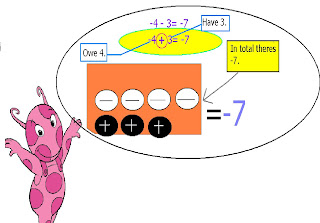
They all saw the arrow and they started walking toward it, then they walked past the arrow. They walked ahead alittle further more and saw a animal but they couldn't make out what it was. Once they reached the animal they were surprised to see it was a buffalo standing beside a stream. The buffalo said "You have made it to your final question" the buffalo said and looked at Pablo. "If you answer this question correctly you will find the castle down the stream and over the hill, another animal will be waiting to give you the the key to the castle" the buffalo said. "Here is your question... Pablo... +2-+6+-2" the buffalo said in a loud voice. Pablo mumbled and mumbled to himself trying to think out the answer. He finally got it, he changed the question a bit to get the answer. "its -6" said Pablo. "Good job, that one was a tricky one but you got it!" said the buffalo excited. "You now must follow the stream, and when the stream comes to a end there will be a hill you must walk up the hill to see the next animal with the key to the castle" the buffalo said in a very clear and loud voice. 
They started running down the side of the stream, the stream final ended and they reached the hill, the hill was a grassy hill with a lot of colors. They started walking up the grassy hill, it took them a very long time to get to the top of the hill but then finally they reached the top of the hill, and saw a kangaroo they drew closer and closer to the kangaroo. When they got close enough they heard the kangaroo say "Hey guys, you made it this far and i cant believe it, good work, here is now the key to the castle. Tasha immidantaly was super excited and grabbed the key as soon as she saw the key. Tasha grabbed Pablo, Austin, Tyrone, and Uniqua and she started running with them up to the castle, they all got really excited but not knowing what they would wish for. They final got to the door of the castle, Tasha took the key out of her pocket and she opened the door."Wow, this is AMAZING" said Tasha. "I cant believe we made it this far" said Pablo. The castle was huge, with a lot of color like everything else, the walls were made with great big stones. Each and every one of them made 3 wishes but 1 of the wishes was that they all wished to go back in their backyard.
The End.. (: