Braden's measures of central tendency
Joysie's Measures of Central Tendency
- Arrange data in ascending order
- Add all data then divide the data by the number of data
Median- Arrange data in ascending order
- The Median is the middle number
Mode- Arrage data in ascending order
- The mode is the most frequent occuring number
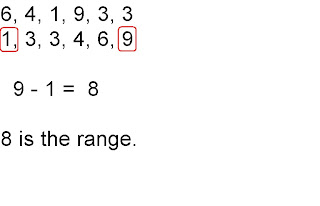
- Arrange data in ascending order
- Subtract the smallest data from the largest data

Joshs Measures of Central Tendancy
- put your data in numerical order
- add up every piece of data
- divide by the number of pieces of data there were
- arange your data in numerical order
- cross out one number on both sides till you find the middle
- if there are two numbers add them up and divide them by two
- the most common number in a set of data
- arrange your data in numerical order
- subtract your lowest data from your highest data
Alex's Measures of Central Tendancy
- arrange data in ascending order.
- the sum of all data divided by the number of data.
- with an oulier the mean is less accurate

- arrange the data in ascending order.
- find the middle number
- if there are 2 middle numbers you find the mean of them.
- great to use if theres no outlier.
Mode - arrange the data in ascending order.
- find the data that occurs the most in the set of data.
- you can have more than one mode.
- you can have no mode.

- arrange the data in ascending order.
- subtract the smallest data from the biggest data
- Large Range = Outlier

Here is the Video I found on MMM
Avery's Measures of Central Tendancy
- Arrange the data in ascending order
- the sum of all data divided by the number of data
- with an outlier the mean is less accurate "average"
1,2,3,4,5
- Arrange the data in ascending order Find the middle number
- If there are 2 middle numbers you have to find the mean of them
- Great to use if there is an outlier
1,2,3,4,5
- Arrange data in ascending order Find the data that occurs the most
- You can have more than one mode
- You can have no mode
1,2,4,4,5
- Arrange data in ascending order
- Subtract the smallest number from the largest
- Large=Outlier
1,2,3,4,5
John's Measures of Central Tendency
- Arrange data in ascending numerical order.
- Divide the sum of all of the numbers in that set of data by how many numbers there are.
- Arrange data in ascending numerical order.
- Find the middle number by crossing of the end numbers until you have one or two numbers left.
- If you have two numbers left, add both of those numbers together and then divide that number by two.
- If you have one more number left, you have got your median.
- Great to use if there is an outlier.

- Arrange data in ascending numerical order.
- you can have more than one mode or no mode at all.

- Arrange data in ascending numerical number.
- Subtract the largest piece of that from the smallest.
- If you have a large range there is a possibility that you have an outlier.

Here is a video of Mean Median and Mode . . .
Erika's Measures of Central Tendency
- Arrange the data in ascending order.
- The sum of numbers divided by how many numbers there are in a data .
- With an outlier the mean is less accurate.

- Arrange the data in ascending order.
- The middle number in a set of data.
- Find the middle number.
- If there are 2 middle numbers you find the mean of them.
- Great to use if there's an outlier.
- Arrange the data in ascending order.
- The most frequently used number in the data.
- Data that appears the most.
- More than one mode.
- You can have no mode.
This is the video I found on MEAN , MEDIAN , MODE , and RANGE .
Lara's Measures of Central Tendency, mmm
-great to use if there is an outlier
-Find middle number
-data must be arranged in numerical order
-if there are 2 middle numbers,you find the mean of them

MODE!
-Find the most common number in the set of data
-arrange data in ascending order
-you can have more then one mode or you can have no mode 
RANGE!
-arrange the data in ascending order
-subtract the smallest data from the largest data
-Large Range=Outlier

Here is a video i found on mean, median, and mode !
Jai's Measures of Central Tendancy
- Arrange data in ascendeing numerical order.
- Divide the sum of all of the numbers in that set of data by how many numbers there are.
- With an outlier less accurate..

Median
- Arrange data in ascending numerical order.
- Find the middle number by crossing of the end numbers until you have one or two numbers left.
- If you have two numbers left, add both of those numbers together and then divide that number by two.
- If you have one more number left, you have got your median.
- Great to use if there is an outlier.

Mode
- Arrange data in ascending numerical order.
- You can have more than one mode or no mode at all.

- Arrange data in ascending numerical number.
- Subtract the largest piece of dat from the smallest.
- If you have a l
arge range there is a posibility that you have an outlier.
This is a video that I found about mean, medain, mode, and range.
Breann's 3 m's
- ascending order
- sum of all the data
- number of data
- ascending numerical order
- the middle number
- found in the middle
mode
- ascending order
- most common number
- number that shows up the most
range
- ascending order
- added up numbers
- divided
Here is a movie about mean median mode
Tanners mean, median and mode
- the sum of all data devided by the number of data
- outlier effects the outcome
This is a link about the mean
http://www.robertniles.com/stats/mean.shtml
Median
- the middle number of a set of data
- there are two middle numbers find the mean of the numbers
This is a link about median
http://www.robertniles.com/stats/median.shtml
Mode
- the number that shows up the most
there can be more than one or no mode
This is a link about mode
http://www.mathgoodies.com/lessons/vol8/mode.html
Range
- the largestest data minus the smallest data
- an outlier effects the outcome
This is a link about rangehttp://www.mathgoodies.com/lessons/vol8/range.html
Johnray measures of central Tendancy.
- The sum of a set of values divided by the number of values in the set.
- Arrange the data in ascending order.

Median
- The middle number in a set of data after have been arranged in order.
- The median is a measure of central tendency that describes the middle of the set
of data.
Mode
- The mode is the most frequently occurring value in a set of data.
- The item in a list of numbers that appears most often is the mode. For example:

Range
kimmy's measures of central tendency


mean (:
mode
Alyanna's Measure of Central Tendency
- arrange the data in ascending order
- the middle number in a set of data
- if there are 2 middle numbers you find the mean of them
- great to use if there is an outlier
Mode
- arrange the data in ascending order
- most frequently used number in the data
- you can have more then one more or NO mode
- arrange the data in ascending order
- subtract the smallest number from the biggest number
- outlier = biggest number
Here is a video of Mean Median and Mode ..
Josh T's Measures of Central Tendency
- the most occurring number in the set of data
- easy way to find the average if most are the same number
- the exact middle number
- good way to find the average if there is an outlier
- the biggest number subtracted by the lowest number in the set of data
- it helps find the middle number in between those two numbers
Linda's Measures Of Central Tendency
Definition:
-Arrange the data in ascending order
-Add all the data and divide by how many pieces of data there are
-When an outliers are present, it makes the mean less accurate
MEDIAN Definition:
-You must arrange the data in ascending order
-Find the number in the middle number
-If there are 2 numbers in the middle, add them, then divide by 2
-Using the median is appropriate if there are outliers present because it gets rid of them
MODE Definition:
-Arrange the data in ascending order -
The most frequently occurring number in a set of data
-There can be more than one mode
-There can be no mode at all
RANGE Definition:
-You must arrange the data in ascending order
-Subtract the smallest data from the biggest data
-Range tells you if there are outliers
-The smaller the range, the less chance there is of being outliers present

Here is a video of Mean Median and Mode...
Kevin's Measures of Central Tendency
- Arrange in ascending order
- Add all the data together, then divide the sum by the number of data
- If there is an outlier in the data, it is not as accurate
Median- Arrange in ascending order
- Find the middle number
- If there are two middle numbers, add them up and divide them in half
- It is better to use the median than the mean when there is an outlier, because the median will cross it out
Mode- Arrange in ascending order
- Find the number that occurs most
- There can be more than one mode
- There can also be no mode
Range- Arrange in numerical order
- Subtract the smallest data from the largest data
- If the range is big, it can tell you that there probably is an outlier
Here is a video I found about MMM