Courtney's Measure of Central Tendency

Sunday, September 28, 2008

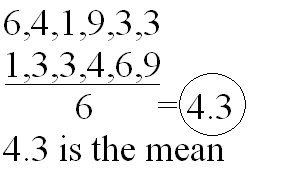
Mean
- Arrange in ascending order.
- Add all the numbers.
- Then the number you got divide by.
how many numbers are in the data.
- With an outlier the mean is less accurate "average".

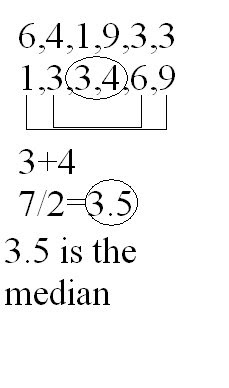
Median - Arrange in ascending order/numerical order.
- Middle number in data.
- Great to use if there is an outlier.
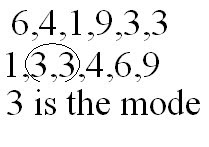
Mode
- Arrange the data in ascending order.
- There can be more then 1 mode.
- The data that appears the most.
- You can have no mode.
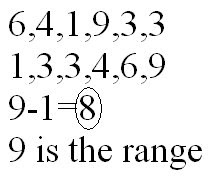
Range
- Arrange the data in ascending order.
- Subtract the smallest data from the largest number.
- Large range = outliers.

Here is a video of mean median and mode..




Kim C's Measure Of Central Tendency

MEAN
  • arrange the data in ascending order
  • add the data up
  • divide the data's sum by the number of data in the data
  • with an outlier in the data the mean is not that accurate
  • arrange the data in ascending order
  • the middle number in the data is the median(find the middle number)
  • if there are two medians add them up and divided by two
  • when data has an outlier the median would be the best choice

MODE

  • arrange the data in ascending order
  • the most frequently used number is the mode
  • there can be more that one mode
  • there can be no mode
RANGE
  • arrange the data in ascending order
  • subtract the smallest data from the largest data
  • LARGE data = outlier
This is a video I found on Measure of Central Tendency...

Austin's Measures of Central Tendency

Mean

  • arrange the data in ascending order
  • the sum of data divided by how many numbers there are in the data
  • with an outlier the mean is less accurate (average)
1 2 3 4 5
1+2+3+4+5=15
15 divided by 5 equals 3
3 is the mean

  • arrange the data in ascending order
  • the middle number in a set of data
  • if there are 2 middle numbers you find the mean of them
  • great to use when there is an outlier
1 2 3 4 5
1 5
2 4
3
3 is the median

Mode

  • arrange the data in ascending order
  • the most frequently used number in the data
  • the data that appears the most
  • you can have more than one mode
  • you can have no mode

1 2 3 3 4

3 appears the most

3 is the mode

Range

  • arrange the data in ascending order
  • subtract the smallest data from the largest data
  • large range = outlier
1 2 3 4 5
5 is the largest number
1 is the smallest number
5-1=4
4 is the range

This is a video that I found on youtube that had to do with mean, median, and mode.


Karen's Measures of Central Tendency

Mean
  • Must arrange data in ascending order.
  • Add all of the numbers in the data set, and then divide by the total number of data entries.
  • * with an outlier the mean is less accurate "average".


Median
  • Must arrange data in ascending order.
  • Find the middle.
  • If there's 2 middle numbers, add them both then divide it by 2.
  • * great to use if there is an outlier.
Mode
  • Must arrange data in ascending order.
  • find the data that appears the most.
  • there could be more than one mode
  • there could be no mode.
Range
  • Must arrange data in ascending order.
  • Subtract the smallest data from the highest data.
  • * large range=outlier

Video about measures of central tendency!

Nikki's Measures of Central Tendancy

Mean

- arrange data in ascending order
- the sum of all data divided by the number of data
- with an outlier the mean is less accurate "average"


- arrange in ascending order
- find the data in the middle
- if there are 2 middle numbers you fing the mean of them
- great to use if there is an outlier


- arrange the data in ascending order
- the number that appears most in the set of data
- you can have no mode
- you can have more than one mode

Range

- arrange the data in ascending order
- subtract the smallest data from the largest data
- large range= outlier
Here is a video I found on mean, median and mode.

Karessa's Measures of Central Tendency

Saturday, September 27, 2008
  • Arrange the data in ascending order
  • The sum of all data divided by the number of data
  • With an outlier the mean is a less accurate "average"


  • * Data must be arranged in numerical order
  • Find the middle number
  • If there are 2 middle numbers, you find the mean of them
  • Great to use if there is an outlier


  • Arrange the data in ascending order
  • The data appears the most
  • You can have more than one mode
  • You can have no mode


  • Arrange the data in numerical order
  • Subtract the smallest data from the largest data
  • Large range = outlier


Here is a video I found on MMM.

Nicky's Measures of Central Tendency

Mean
  • arrange the data in ascending numerical order
  • sum of all data/number of data
  • with an outlier the Mean is a less accurate "average"
  • arrange the data in ascending numerical order
  • find the middle number
  • if you end with two, sum of middle number/2=Median
  • great to use if there is an Outlier
Mode
  • arrange the data in ascending numerical order
  • find the most common number
  • you can have more than 1 Mode
  • you can also have no Mode
Range
  • arrange the data in ascending numerical order
  • subtract the smallest data from the largest data
  • large Range=Outlier


Here is a Video showing Mean, Median and Mode: